

Car Breakdown Guide UK: What to Do, What to Carry and How to Stay Safe
Your car cuts out on a dark A-road. It's 2 degrees, your phone is on 9% and the nearest garage is closed. What you do in the next 60 seconds matters more than anything the recovery driver does later.
Written by the team at TGPP Autocare, Stevenage. Updated October 2026.
Quick answer: what to do if your car breaks down
Switch your hazard lights on and get the car off the road, or as far left as you can. Get everyone out through the doors furthest from traffic and wait well away from the car, behind a barrier if there is one. Then call your breakdown provider. Never attempt repairs on a motorway and never put a warning triangle on one. If you can't get out or can't reach a safe place, stay in the car with your seat belt on and hazards flashing, and call 999 and ask for the police.
Nobody plans to break down, but plenty of us do. This guide covers what to check before you set off, what to keep in the car, and exactly what to do when it goes wrong, whether you're on a motorway, a country lane or a smart motorway with no hard shoulder. The safety steps follow the current Highway Code.
Why breakdowns happen more than you'd think
Of breakdowns attended by National Highways in winter 2023/24 were tyre related, the biggest single cause (cinch analysis of National Highways data).
Of all RAC breakdowns on the first Monday of 2025 were flat batteries. The AA says "vehicle not starting" is its most common callout.
Drivers a year are estimated to put the wrong fuel in their car.
The good news: tyres, batteries and fluids are exactly the things you can check yourself in ten minutes.
The 10-minute check that stops most breakdowns
Before a long trip, and once a month
- Tyres: check pressures (they're in your handbook or on the door frame), look for bulges and cuts, and check the tread. The legal minimum is 1.6mm across the central three-quarters of the tyre. Worn or damaged? See our tyre service.
- Battery: most batteries last around 3 to 5 years. A slow, laboured start or a flickering battery light means get it tested now, not after it leaves you stranded.
- Oil, coolant and screenwash: check levels when the engine is cold and top up to the marks.
- Lights: walk round the car with the hazards on and check every bulb, including brake lights.
- Fuel and AdBlue: don't run the tank near empty. Many modern diesels won't restart once AdBlue runs out.
- Warning lights: a red light means stop safely and switch off. An amber light means get it checked soon. Don't ignore either. Our car diagnostics find the real cause, not just clear the light.
Got a wet belt engine? Many Ford EcoBoost, Ford EcoBlue and Peugeot/Citroën PureTech cars use a timing belt that runs in oil. A failing belt can turn a simple breakdown into an engine rebuild. Know when yours was last changed, and if you get an oil pressure warning, stop and switch off straight away. See our wet belt replacement guide for more.
What to keep in your car
You don't need a van full of kit. You need the right small things in the boot, all year round.
The essentials
- Phone charger cable and a charged power bank
- A hi-vis vest for every passenger, kept where you can reach it
- Warning triangle (for normal roads only, never motorways)
- Torch with working batteries
- First aid kit
- Warm coat or blanket, plus water and snacks
- Spare wheel, or a tyre inflator and sealant kit if your car has no spare
- Locking wheel nut key (the one everyone loses)
- Your breakdown cover number saved in your phone and written in the glovebox
Winter and long-journey extras
- Ice scraper and de-icer
- Gloves, hat and sturdy shoes for the walk
- Jump leads or a jump starter pack (check your handbook first, see below)
- Tyre pressure gauge
- Drinks, snacks and something to keep children busy; water for pets
What to do when it happens: pick your road
MotorwayGo left, get safe, get help
- If you can, leave at the next exit or pull into a service area.
- If you can't, move into the left lane and pull into an emergency area or onto the hard shoulder. Stop as far left as possible with your wheels turned to the left, ideally just past an emergency telephone.
- Switch your hazard lights on, plus sidelights if it's dark or visibility is poor.
- Get out through the side furthest from traffic if it's safe, and get your passengers out too. Put on hi-vis if it's within easy reach.
- Wait well away from the car and the traffic, behind the safety barrier if there is one. Don't stand where your car could be shunted into you.
- Use the free emergency telephone, or call your breakdown provider. Face the traffic while you talk. Tell them if you're alone, older or disabled.
Pets must stay in the vehicle, or be kept under control on the verge in an emergency. Don't get back into the car because it's cold, wet or dark. To rejoin from a hard shoulder, build up speed, indicate and wait for a safe gap. From an emergency area you must use the emergency phone and follow the operator's advice.
Stuck in a live laneStay put if you can't get out
If you can't reach the left lane or a place of relative safety, and you can't get well away from the car, stay in it. Keep your seat belt and hazard lights on and call 999, asking for the police. If your car has an SOS button, you can press it and ask for the police.
Normal roadThink of other road users first
- Get the car off the road if you can, and put your hazard lights on if it's causing an obstruction.
- Wear hi-vis by day, reflective clothing at night.
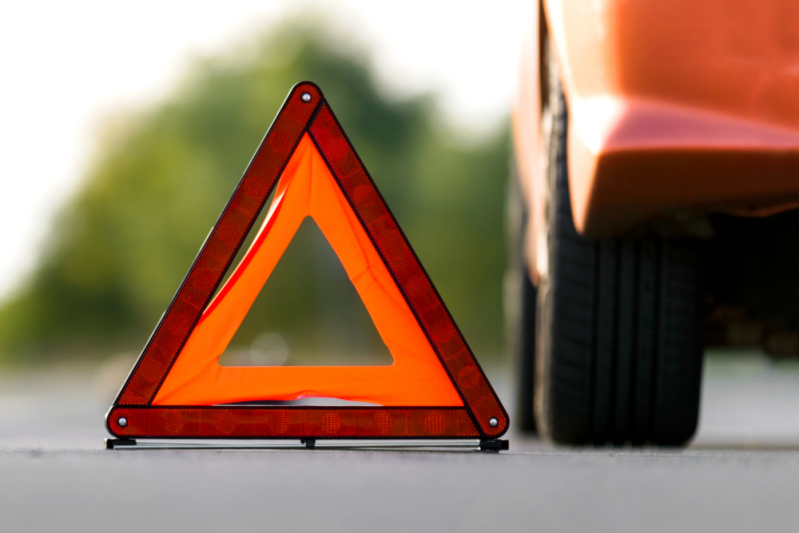
- Place your warning triangle at least 45 metres (147 feet) behind the car on the same side of the road, taking great care. Never use it on a motorway.
- Keep sidelights on in the dark. Never stand between your car and oncoming traffic, and at night don't stand where you block other drivers seeing your lights.
Telling them where you are
Use the emergency phone (it already knows), press the SOS button if your car has one, share your location from a maps app, or read out the numbers and letters on the marker posts or driver location signs at the roadside.
Fixing the common ones safely
Puncture
Don't change a wheel on a motorway hard shoulder. Call for help. A sealant kit is a temporary fix to get you somewhere safe, not a repair. Then get the tyre looked at properly with our tyre service.
Wrong fuel
Don't start the engine. Take the key out (or switch off a keyless car), put it in neutral if you need to move it, and call recovery. Driving off turns a drain-and-flush into a much bigger bill.
Overheating
Pull over, switch off, and wait for it to cool. Never open a hot coolant cap. A boiling hot system can spray scalding liquid. Repeat overheating needs a proper look at the cooling system: see our cooling system services.
Flat battery
Jump starting can damage the electronics in modern cars, especially with stop-start and hybrid systems. Check your handbook, or let the patrol do it.
Electric and hybrid cars
They still have a 12V battery that can go flat and leave you stuck. Don't let anyone tow an EV without checking the handbook, as the wrong method can damage it.
Never do this
- Never stand between your car and the traffic.
- Never try repairs on a motorway, even simple ones.
- Never put a warning triangle on a motorway.
- Never climb back into a broken-down car on the hard shoulder because it's cold.
- Never restart a car after filling it with the wrong fuel.
After the breakdown: fix the cause, not just the symptom
A jump start gets you moving, but it doesn't tell you why the battery died. A tow home doesn't tell you why the engine cut out. Get the car properly diagnosed and ask for the findings in writing. Keep your invoices, as they matter for warranty claims and for your next service.
It's also worth checking what your breakdown cover actually includes: roadside repair, recovery to a garage, home start and onward travel. Cover isn't a legal requirement, but a call-out and tow without it can cost far more than a year's policy.
Services that keep you off the hard shoulder
- Car servicing: catches worn parts and low fluids early
- MOT testing: an annual check on tyres, lights and brakes
- Car diagnostics: finds the cause behind a warning light
- Car repairs: brakes, clutches, exhaust, suspension and more
- Tyres: fitted and checked in Stevenage
- Cooling systems: stops overheating before it strands you
Breakdown FAQs
What should I do first when my car breaks down?
Put your hazard lights on and get to a place of relative safety. That means a service area, lay-by, emergency area or hard shoulder, with the safest options being the ones designed for parking. Then get everyone out and away from traffic, and call for help.
Should I stay in my car or get out?
If you can get out safely, get out through the side furthest from traffic and wait well away from the car. Stay in the car with your seat belt and hazard lights on only if you can't reach a safe place or can't get out, then call 999.
Can I use a warning triangle on a motorway?
No. The Highway Code says never to use warning triangles on motorways. On other roads, place one at least 45 metres behind your car on the same side of the road.
What do I do if I break down on a smart motorway with no hard shoulder?
Move to the left lane and use an emergency area if you can reach one, and call for help from the emergency telephone. If you can't get to a safe place, stay in the car with your seat belt and hazards on and call 999.
What should be in a car breakdown kit?
A charged phone and power bank, hi-vis vests, a warning triangle, a torch, first aid kit, warm clothing, water and snacks, and your breakdown cover details. Add a tyre inflator or spare wheel and a locking wheel nut key.
What is the most common cause of a car breakdown?
A flat or faulty 12V battery is the most common callout for the AA and the RAC, and tyres are not far behind. National Highways data for winter 2023/24 put tyre faults top at 18.6% of the breakdowns it attended.
Do I have to have breakdown cover?
No, it isn't a legal requirement. But call-out and recovery fees without cover can add up quickly, so most drivers find a policy cheaper than a single bad day.
How do I tell the emergency services where I am?
Use the emergency telephone, press your car's SOS button, share your location from a maps app, or quote the numbers and letters on the nearest marker post or driver location sign.
Fix it before it leaves you stranded
Worn tyres, a tired battery, a leaking coolant hose, a warning light you've been ignoring. We find these in a service, MOT or diagnostic check, before they turn into a roadside call-out. Every repair carries our 12-month parts and labour guarantee, and finance is available at 0% through PaymentAssist. More advice on our blog.
TGPP Autocare, Unit 8, Chells Industrial Units, Chells Way, Stevenage, SG2 0LQ
Book online Call 01438 232556 WhatsApp usSources
- The Highway Code, rules 275 to 279 (breakdowns and incidents), GOV.UK: gov.uk/guidance/the-highway-code/breakdowns-and-incidents-274-to-287
- cinch analysis of National Highways breakdown data, winter 2023/24, reported by Bodyshop Magazine
- AA and RAC "Manic Monday" breakdown figures, reported by Fleet World, January 2026
- Admiral Insurance: top 10 causes of car breakdowns (misfuelling estimate and battery guidance)
Add comment
Comments